


Informational Nature
The information provided in this text is for scientific and educational purposes. It is intended to explain what peptides are and how they participate in biological processes. The text does not include recommendations for use, dosage, or therapeutic application.
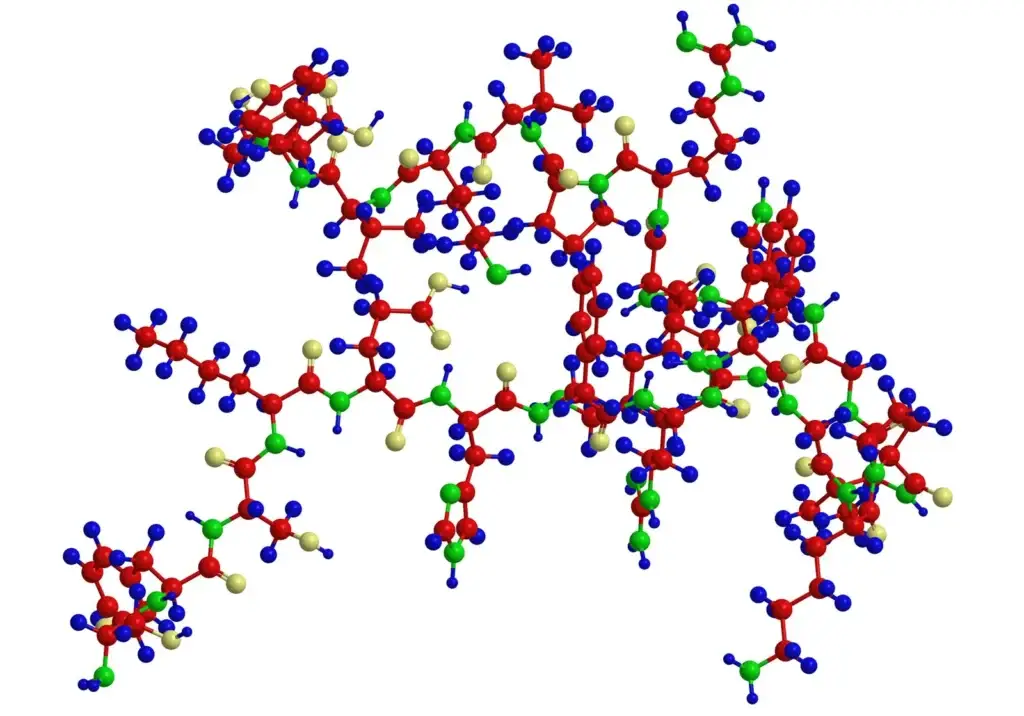
Peptides are natural biological molecules that act as intermediaries for information transfer within the body. They enable cells to “communicate” and coordinate complex processes—from growth and regeneration to metabolism and immune responses. Their function depends on precise structure and the ability to interact with specific receptors that initiate intracellular signaling mechanisms. This article explains, in a clear and structured way, what peptides are, how they activate cellular signaling pathways, and why the interpretation of these processes always depends on biological context. The text is intended for general understanding of molecular mechanisms and does not cover usage or therapeutic applications.
Keywords: peptides; amino acids; receptors; GPCR; RTK; signal transduction; MAPK; PI3K/AKT; oxidative stress; Nrf2; molecular biology; cell signaling
What are peptides?
Peptides are short chains of amino acids. Amino acids are the building blocks of proteins. When the chain is short (typically 2–50 amino acids), it is called a peptide. Longer chains are generally considered proteins [1].
In the body, peptides often act as signals. They can be thought of as “messages” that one cell sends to another. In this way, the body coordinates many processes—from growth to metabolism and immune responses.
The function of a peptide depends on:
- the amino acid sequence,
- spatial structure,
- the ability to bind to specific molecular targets [2].
Even a small structural change can alter its interaction with receptors.
How do peptides transmit signals?
For a peptide to function, it must bind to a receptor—a protein located on the cell surface.
Many biologically active peptides act through:
- G protein-coupled receptors (GPCR) [3],
- receptor tyrosine kinases (RTK) [4].
A receptor can be compared to a lock, and a peptide to a key. If the key fits, the receptor is activated, triggering signaling processes inside the cell.
These processes may include:
- cAMP signaling,
- MAP kinase (MAPK) pathways,
- the PI3K/AKT system [3,4].
These are the cell’s “internal communication” systems that transmit signals to the nucleus and regulate gene activity.
Signaling networks and their complexity
Biological systems operate through network logic rather than linear pathways. This means that one signal can influence multiple others, and the final response depends on many factors.
Peptides may be involved in processes related to:
- cell growth and regeneration [5,6],
- regulation of metabolic processes [7],
- immune system signaling [8].
It is important to understand that much of this data comes from experimental models—such as cell cultures or animal studies [5,6]. These models help explain mechanisms but do not always fully reflect the complexity of the human body.
Oxidative stress and signaling
Reactive oxygen species (ROS) are often associated with cellular damage, but they also act as signaling molecules [9].
One important regulatory protein is Nrf2—a transcription factor involved in cellular adaptive mechanisms [10].
Scientific research examines how different molecules interact with these systems. However, the significance of such interactions always depends on biological context and experimental conditions.
Why is context important?
The same signal can produce different responses in different cells. Signal transduction depends on:
- cell type,
- microenvironment,
- molecule concentration,
- other simultaneously active signals.
Therefore, results obtained in one system cannot always be directly transferred to another [6].
Discussion
Peptides are a fundamental part of internal biological communication. They act with precision and specificity because their structure determines which receptor they can interact with. This structure–function relationship is one of the key principles of molecular biology [2].
When a peptide binds to a receptor, a signaling cascade is initiated. However, these pathways are not isolated—they operate within complex networks. For example, MAPK and PI3K/AKT pathways are involved in many cellular functions, from growth to survival [3,4]. Therefore, their activation cannot be evaluated independently of the overall cellular context.
Biological systems also exhibit adaptability. Prolonged activation of signaling pathways can alter receptor sensitivity or activate compensatory mechanisms. This means that the initial response may change over time.
From a scientific perspective, it is important to distinguish between experimental models and whole-organism systems. Cell cultures allow detailed analysis of mechanisms but do not represent all factors present in living organisms. Animal models provide broader context, but interspecies differences must also be considered [5,6].
Thus, evaluating the role of peptides requires a systems-based approach. They are important mediators of signaling, but their effects depend on many interconnected factors. Biology is not a simple cause-and-effect system—it is a complex balance of regulatory networks.
Conclusions
- Peptides are short chains of amino acids that function as signaling mediators in biological systems [1,2].
- Their function depends on structure and interaction with specific receptors [2,3].
- Binding to receptors activates intracellular signaling pathways such as MAPK or PI3K/AKT [3,4].
- Biological processes occur within complex networks, and their interpretation depends on context [5,6].
- Most knowledge about these mechanisms comes from experimental models [6].
References
[1] Alberts B, et al. Molecular Biology of the Cell. 6th ed. Garland Science; 2015.
https://www.routledge.com/Molecular-Biology-of-the-Cell/Alberts-Johnson-Lewis/p/book/9780815344643
[2] Fosgerau K, Hoffmann T. Peptide therapeutics: current status and future directions. Drug Discovery Today. 2015;20(1):122–128.
https://doi.org/10.1016/j.drudis.2014.10.003
[3] Pierce KL, Premont RT, Lefkowitz RJ. Seven-transmembrane receptors. Nature Reviews Molecular Cell Biology. 2002;3(9):639–650.
https://doi.org/10.1038/nrm908
[4] Lemmon MA, Schlessinger J. Cell signaling by receptor tyrosine kinases. Cell. 2010;141(7):1117–1134.
https://doi.org/10.1016/j.cell.2010.06.011
[5] Gurtner GC, et al. Wound repair and regeneration. Nature. 2008;453:314–321.
https://doi.org/10.1038/nature07039
[6] Eming SA, et al. Wound repair and regeneration. Science Translational Medicine. 2014;6(265):265sr6.
https://doi.org/10.1126/scitranslmed.3009337
[7] Drucker DJ. The biology of incretin hormones. Cell Metabolism. 2006;3(3):153–165.
https://doi.org/10.1016/j.cmet.2006.01.004
[8] Murphy K, Weaver C. Janeway’s Immunobiology. 9th ed. Garland Science; 2016.
https://www.routledge.com/Janeways-Immunobiology/Murphy-Weaver/p/book/9780815345053
[9] Sies H, Jones DP. Reactive oxygen species as signalling agents. Nature Reviews Molecular Cell Biology. 2020;21:363–383.
https://doi.org/10.1038/s41580-020-0230-3
[10] Tonelli C, Chio IIC, Tuveson DA. Transcriptional regulation by Nrf2. Antioxidants & Redox Signaling. 2018;29(17):1727–1745.
https://doi.org/10.1089/ars.2017.7342